1. Deal
Thirteen cards each. One face-up card starts the discard pile. The closed deck sits beside it. Joker(s), if printed, are face-up at the centre.
Walk one deal
One deal, from the first face-up card to a valid show. Group the cards, hold a pure sequence, then look for the second sequence.
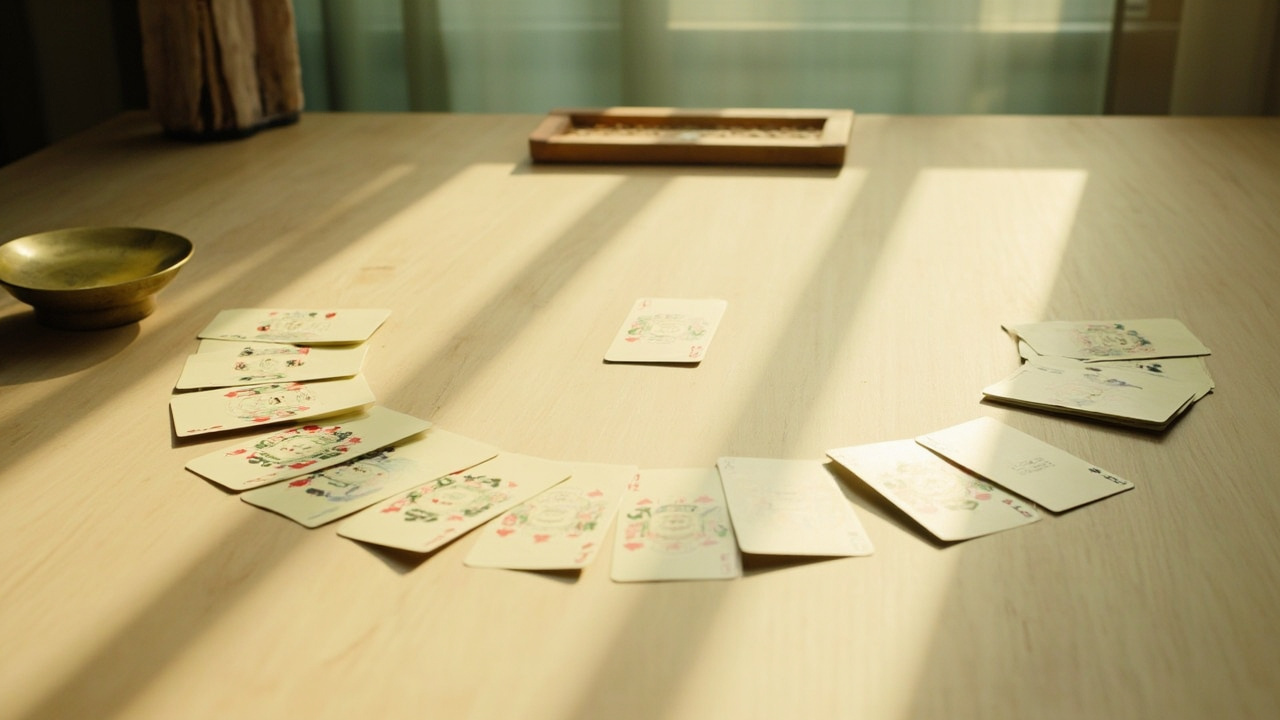
Thirteen cards each. One face-up card starts the discard pile. The closed deck sits beside it. Joker(s), if printed, are face-up at the centre.
Separate obvious sets and runs. Do not commit to a pure sequence yet. Watch the open joker and one card from the discard pile.
Consecutive cards of one suit, no joker. This is the rule a show cannot bypass. If you do not see one yet, the priority is to draw toward it, not to build sets.
A second sequence can be pure or impure (with a joker). Three or four of a rank can also close the requirement, but never in place of the pure run.
Pick from the discard pile only when the card completes a group. Blind picks feed the opponent's hand and cost a turn.
If the pure sequence is unreachable, the drop price is usually cheaper than a wrong declare. Confirm the live Speedwin drop numbers before the first card is drawn.
Lay the two sequences face-up, group the remaining cards, and announce. A wrong declare usually carries the highest penalty on the table.
Unmatched cards count against the declarer in points. In deals and pool, that score feeds the next round. Screenshot the result if the table prints one.

Look at the card on the table: same suit, consecutive ranks, no joker. That is the only combination a show cannot fake. If the pure sequence is missing, the rest of the hand is decoration.
Same suit, consecutive ranks, no joker. The only required grouping in a valid 13-card rummy declaration. A joker inserted here makes the sequence impure and the show fails.
Three or four cards of the same rank, across suits. Useful for closing leftover cards. A set cannot stand in for a missing pure sequence.
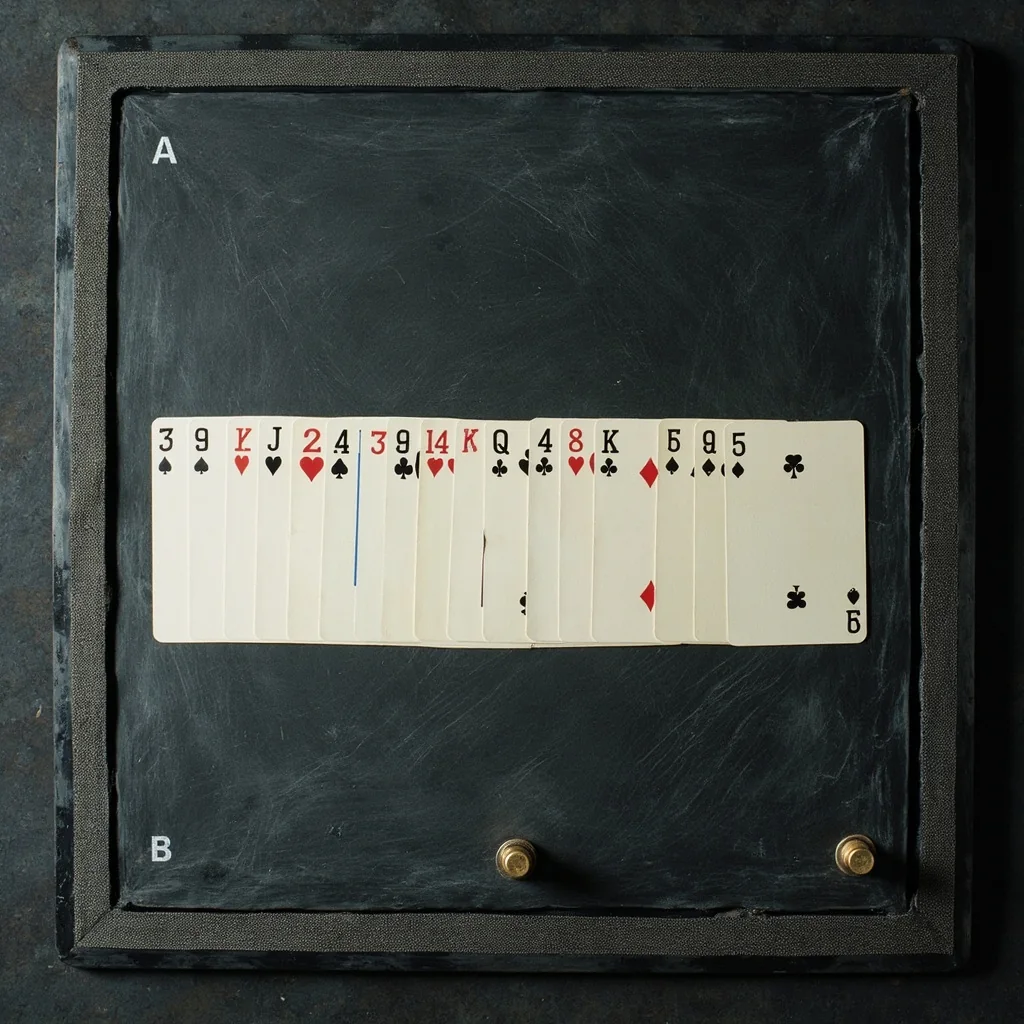
Two sequences face-up, at least one pure. The remaining cards grouped into sets or runs where possible. Anything still unmatched counts against you. The joker is a substitute, not a creator.
Read strategy limits
Most first deals finish inside ten to fifteen minutes once players know the sequence. A first-table player should budget more, and not treat that window as a result.
Yes, if the joker is in play. The joker substitutes a missing rank or suit, but it does not invent a missing pure sequence.
Usually the first drop, before too many cards are drawn. Confirm the live Speedwin drop number on the table before you sit.
No. A declare without a pure sequence is wrong, and the penalty is usually the largest on the table.
Numbered cards from 2 through 10 are worth their face value in points. Face cards (Jack, Queen, King) usually count as 10 points each. Ace is usually worth 1 point. The joker, when it is a substitute, usually counts as 0 points. A printed joker is worth 0 points. These values are the house convention that decides the final score of a lost deal.
What this means at the table: a hand full of face cards and high numbers is a hand that scores against the player on a wrong show. The aim of grouping is not just to declare; the aim is to declare with a low leftover count. A pure sequence of 4-5-6 with two face cards as the second sequence leaves more deadwood than 4-5-6 with two low numbers. Read the leftover before the declare, not after.
What this means for the drop decision: a hand with no path to a pure sequence and a high leftover estimate is a hand that is expensive to declare. The first-drop price is usually cheaper than the wrong-declare price. A reader who knows the values can read the leftover before the drop decision, and that is the kind of reader who saves money on a bad hand.
Blind picks feed the opponent's hand and cost a turn. Pick from the discard pile only when the card completes a group, not when the card simply looks useful.
A joker cannot invent a missing pure sequence. Holding a joker while waiting for a pure sequence is the wrong wait. Use the joker only when the pure sequence is already in place.
A declare without a second sequence is a wrong declare, and the penalty is usually the largest on the table. Check the two-sequence rule on the screen, then declare.
A real-money table is not a practice table. The drop prices are real. Use the how-to-play walk on a practice table first, then sit on a paid table.
The joker is a wild card. It substitutes a missing rank or suit. It does not invent a missing pure sequence. A pure sequence of 4-5-6 of hearts is a pure sequence. A pure sequence of 4-joker-6 of hearts is an impure sequence, and an impure sequence cannot stand in for a pure sequence in a declaration.
Some tables use a printed joker plus one or two wild jokers. Some tables use only the printed joker. Some tables cap joker substitution at one card per group. Confirm the joker rule on the live screen before the first card is drawn. A joker that the table does not print is not a joker; it is a face card with a corner mark.
The joker also scores 0 points when it counts as deadwood. That detail is not trivia. A hand that holds three jokers and no sequence has 0 deadwood from those jokers but a high leftover from the other ten cards. Read the joker count, then read the leftover, then decide to drop or continue.
Minute one is the deal. Thirteen cards each, one face-up to start the discard pile, the closed deck on the table. The joker, if printed, sits face-up at the centre. The minute is mechanical; the reader is not yet playing.
Minutes two to four are the first sort. Separate obvious sets and runs. Do not commit to a pure sequence yet. The minute is observation; the reader is reading the hand.
Minutes five to eight are the first discard. Pick from the closed deck, not from the discard pile, until a path to a pure sequence is visible. The minute is discipline; the reader is not yet declaring.
Minutes nine to twelve are the second sort. If a pure sequence is reachable, look for a second sequence. If a pure sequence is not reachable, look for the drop price. The minute is decision; the reader is choosing between continue and drop.
Minute thirteen is the declare or the drop. Lay the two sequences face-up, group the remaining cards, and announce. Or drop at the posted price. The minute is the show; the reader is finishing the deal.
Deadwood is the unmatched leftover that scores against the player on a wrong show or on a drop. A card that does not belong to a sequence and does not belong to a set is deadwood. The joker, when it counts as deadwood, scores 0 points. Numbered cards score their face value. Face cards usually score 10. Ace usually scores 1.
The aim of grouping is not just to declare; the aim is to declare with a low leftover count. A pure sequence of 4-5-6 with two face cards as the second sequence leaves more deadwood than 4-5-6 with two low numbers. Read the leftover before the declare, not after.
No. A valid 13-card Indian rummy declaration requires two sequences, one of them pure. A set cannot stand in for a missing sequence.
Usually the first drop, before too many cards are drawn. Confirm the live Speedwin drop number on the table before you sit.
No. A joker substitutes a missing rank or suit, but it does not invent a missing pure sequence. A sequence with a joker is impure and cannot stand in for a pure sequence in a declaration.