One declaration ends the deal
Points rummy scores leftover cards on the first valid show. A pretty set does not save a missing pure sequence, and the joker cannot invent one.
Walk one dealFormat ledger
Points, pool and deals use the same card game. They diverge on win condition, drop cost, and how long an evening usually lasts. Read the divergence before the first table.
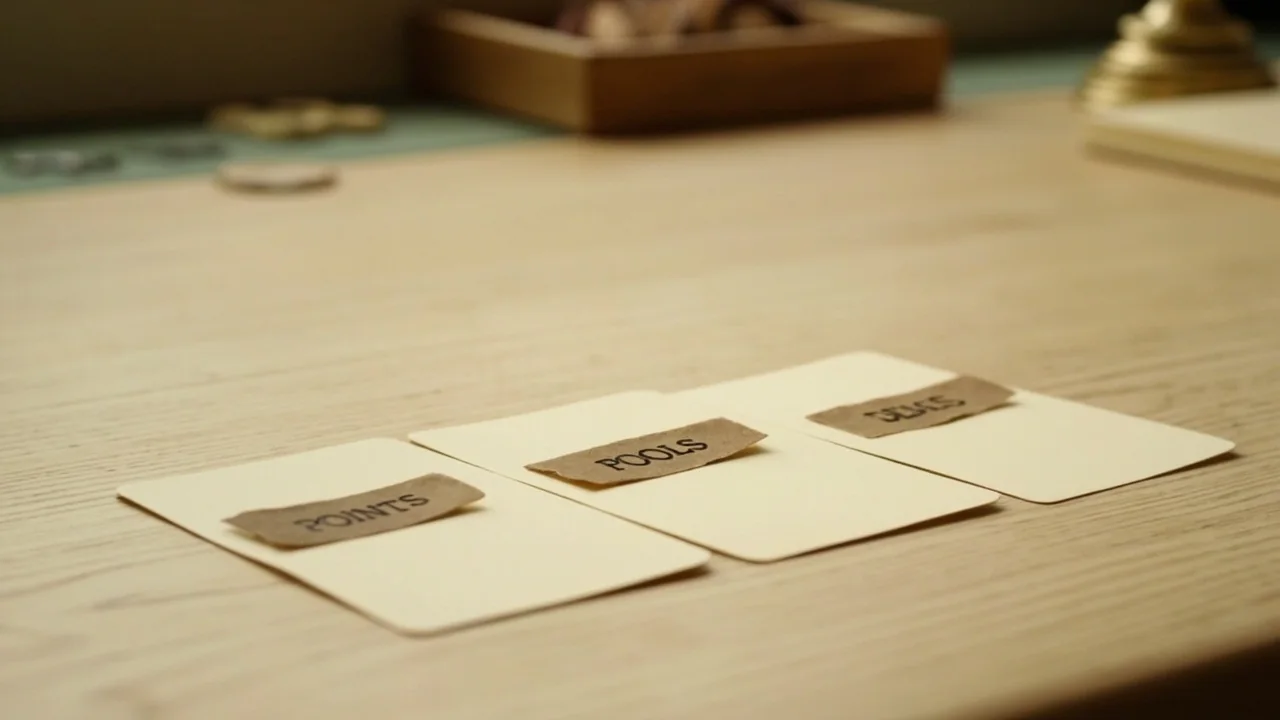
| Question | Points | Pool | Deals |
|---|---|---|---|
| How the deal ends | First valid show | Seat retired by pool total | Packet count, then sum |
| What leftover cards do | Immediate score | Add to a running pool | Add inside a fixed set |
| Typical session feel | Short | Longer, elimination | Bounded evening |
| Drop timing weight | High on one deal | High across many deals | High inside the packet |
| What skill cannot cancel | Unseen pack | Other seats staying in | Packet luck clustering |
| House convention to confirm | First-drop and full-count numbers | Pool ceiling 101 or 201 | Number of packets per evening |
Use this ledger as a decision aid, not a forecast. Live Speedwin labels can differ. If a screen uses a house name, match the win condition against these three jobs before you sit.
Points rummy scores leftover cards on the first valid show. A pretty set does not save a missing pure sequence, and the joker cannot invent one.
Walk one deal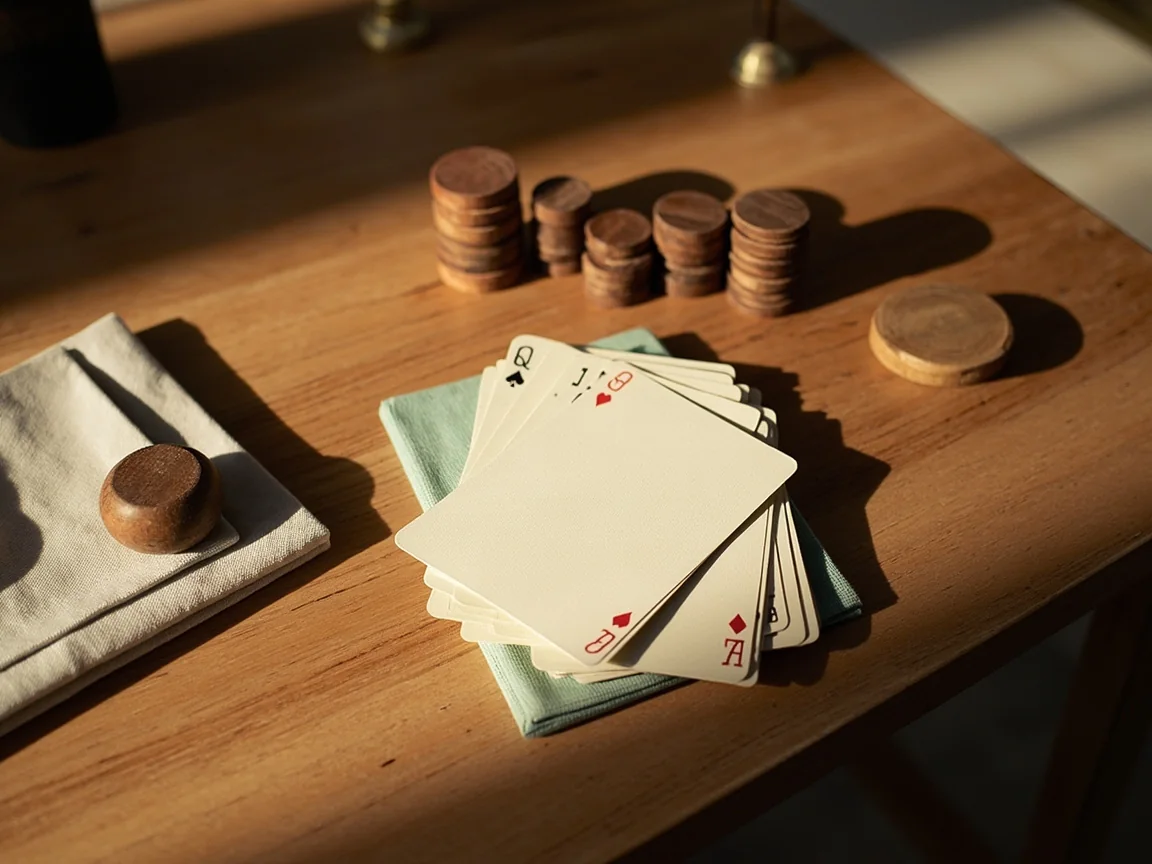
Pool rummy keeps a running total. Common house lines sit at 101 or 201. The last seat standing is a different job from a single-deal show.
Strategy limits
Deals rummy bounds the evening: a set number of packets, then a sum. Drop timing still matters, because the clock is the packet count, not a sudden knock.
Read login checksA short session where one valid show ends the deal. Drop timing decides whether a bad hand is cheap or expensive. House drop numbers vary; read them on the table before you sit.
Walk one dealMultiple deals feed a running pool. A ceiling such as 101 or 201 retires a seat once it is crossed. Patience and discard reading matter because the table can stretch across hours.
Strategy limitsA fixed number of packets bounds the evening. The winner is decided by sum, not by sudden knock-out. Variance lives inside a single packet, not across a long ladder.
Login checksA points seat is short. A pool seat is long. Players who borrow pool patience on a points table lose to the wrong clock.
First-drop 20 / middle 40 / full-count 80 appear in many teaching tables. Confirm the live Speedwin numbers before you sit. They are house conventions, not statutes.
A joker is a substitute, not a creator. A pure sequence with a joker is impure. The declare still fails if the pure run does not exist.
No format pays more by rule. Pool stretches time, deals bounds it, and points finishes one deal. Per-hand value depends on the table, not on the format name.
Easier is not the right word. Deals is bounded, so the variance lives inside a packet. Pool spreads variance across many deals. Pick by the evening you have, not by a difficulty label.
This desk does not assert a Speedwin licence. If a licence line appears on a live screen, that line is the source. State rules still apply.
Points rummy is the format a first-table reader usually meets. Thirteen cards are dealt, one card is turned face-up to start the discard pile, and the closed deck sits beside it. A pure sequence is the rule a show cannot bypass; a joker is a substitute, not a creator. A points table usually has a short life: one valid declaration ends the deal, and the leftover cards count as the score. Drop timing is the lever a player controls, because a first-drop is cheaper than a middle-drop, and a wrong declare is usually the most expensive exit on the table. A reader who treats points as a fast quiz of grouping is the right kind of reader; a reader who treats it as a slow grind is the wrong kind.
Pool rummy is the format a returning reader usually meets. The structure is the same 13-card deal, but the deal does not end on the first valid show. Each player's leftover cards add to a running total. Common house ceilings sit at 101 or 201. A seat that crosses the ceiling is eliminated. The last seat standing is the winner. Pool rummy rewards patience and discard reading. It also rewards the ability to stand up after a fixed number of deals even when the last one felt close, because the table can stretch across hours and the variance lives across many deals.
Deals rummy is the format an evening reader usually meets. The structure is the same 13-card deal, but the session is bounded. A fixed number of packets is played, then the player with the lowest total is the winner. Drop timing still matters because the clock is the packet count, not a sudden knock-out. Deals rummy rewards a reader who plans an evening, sets a time line, and stops when the packets end. The variance lives inside one packet, not across a long ladder, and that is the difference a reader should remember before sitting.
Three numbers appear in many teaching tables: a first-drop of 20, a middle-drop of 40, and a full-count near 80. None of these numbers are statutes. They are house conventions, posted by the table. The live Speedwin table can use different numbers. Confirm them on the screen before the first card is drawn, not after a bad run.
The same rule applies to joker use. Some tables allow up to two jokers; some tables allow printed jokers only; some tables cap joker substitution at one card per group. Confirm the joker status on the screen before you sit.
The same rule applies to maximum seats. A two-seat pool is a different evening from a six-seat pool. The drop numbers can change with the seat count. Read the seat count on the screen, then read the drop numbers, then read the joker rule, then sit.
Easier is not the right word. Deals is bounded, so the variance lives inside a packet. Pool spreads variance across many deals. Pick by the evening you have, not by a difficulty label.
No format pays more by rule. Pool stretches time, deals bounds it, and points finishes one deal. Per-hand value depends on the table, not on the format name.
Only if the live Speedwin table allows it. Most tables lock the format at the start. Re-read the table name before the first discard.
Usually the first drop, before too many cards are drawn. Confirm the live Speedwin drop number on the table before you sit. A drop price is a house convention, not a statute.
Three decisions sit in front of every first-table reader, and the three decisions are the same across formats. The first decision is the time line. The second is the loss line. The third is the break rule. The decisions are not the game; the decisions are the boundary around the game. A reader who sets the three decisions before the first card has done strategy right; a reader who sets them after the first loss has done strategy wrong.
The format decision sits on top of the three decisions. A reader who picks points for a short evening and pool for a long evening has matched the format to the schedule. A reader who picks pool for a short evening has set the wrong boundary. The format is not the game; the format is the clock.
The joker decision sits on top of the format decision. A reader who reads the joker rule before the first card has read the rule. A reader who reads the joker rule after the first discard has read the rule too late. The joker is not a bonus; the joker is a substitution. A substitution that arrives late is the wrong substitution.
No. The format is fixed at the start of the table. A table that mixes points and pool on the same seat is the wrong table. Read the table name before the first discard.
A house line is a number the table posts. First-drop 20, middle-drop 40, full-count 80 are common house lines. A house line is not a statute; the live Speedwin table can post different numbers. Confirm the numbers on the screen before the first card is drawn.
Pool rummy stretches variance across many deals, so a single bad deal does not retire a seat. The feeling of "harder" usually comes from a longer session, not from a different game. Pick pool for an evening; pick points for a deal.